
Most packing lists are too long, and most of them are written the night before a flight. The result is a bag full of maybes and a missing charger. A better list fits on a single page, is sorted by category, and gets reused and trimmed after every trip until it describes exactly what you need. Start it a week before you go, not the evening before, so you have time to wash, mend or buy what is missing.
Why one page
A single page forces choices. If an item does not earn a line, it does not come. It also makes packing faster, because you are ticking off a known list instead of inventing one each time. Print the page, or write it at the back of the trip notebook, and keep a copy for the next trip.
The page has six blocks: clothes, footwear, wash kit, health, documents and money, and tech. Each block holds a handful of lines. Anything that fits no block is a candidate for leaving behind.
Clothes: layers, not outfits
The biggest saving comes from packing layers instead of outfits. Instead of one set of clothes for hot days and another for cold ones, take thin pieces that work together: a few light tops, one warm mid-layer, and an outer layer that blocks wind and rain. Put them on together when it is cold and peel them off as the day warms up.
Pick a small colour range so that everything goes with everything else. Two or three bottoms and four or five tops, all mixing freely, give you more combinations than a bag of separate outfits. For a trip of a week or more, plan to wash clothes on the road rather than packing a fresh set for every day. Weather that swings between extremes needs more thought, which packing for rain, heat and cold covers in detail.
The clothes block
- Three to five tops, in colours that mix.
- Two or three bottoms, one of them smart enough for an evening out.
- One warm layer and one wind and rain layer.
- Underwear and socks for about four days, washed as you go.
- Something to sleep in, and swimwear if there is any chance of water.
Shoes, wash kit and health
Packing by trip type
The page stays the same from trip to trip; the quantities change. A city weekend needs the clothes block cut in half and little else. A beach week swaps the warm layer for a second swimsuit and a hat. A walking trip adds proper boots, a small daypack and blister plasters, and drops the smart evening clothes. A winter city break adds a hat, gloves and thermal underlayers, which pack small and do more than a second jumper. Write these changes as short notes in the margin beside each block, so next time you can adjust the list in two minutes instead of rewriting it.
Shoes are heavy and bulky, so limit them to two pairs: one for walking all day and one lighter pair, ideally worn on travel days to save space. Break new shoes in before the trip, never during it.
Keep the wash kit small. Travel-sized containers, a solid bar where it works, and only what you use at home. Liquids rules for hand luggage vary by airport and country and have been changing as screening equipment changes, so check the current rules for every airport on your route before you pack.
Medicines go in your hand luggage, in their original packaging, with a copy of any prescription. Some medicines that are ordinary at home are restricted elsewhere, so check the official guidance for your destination, and see a doctor or travel clinic well ahead if you need advice. The health checks page has a fuller list. A small kit of plasters, painkillers and anything you take regularly covers most trips.
Documents, money and tech
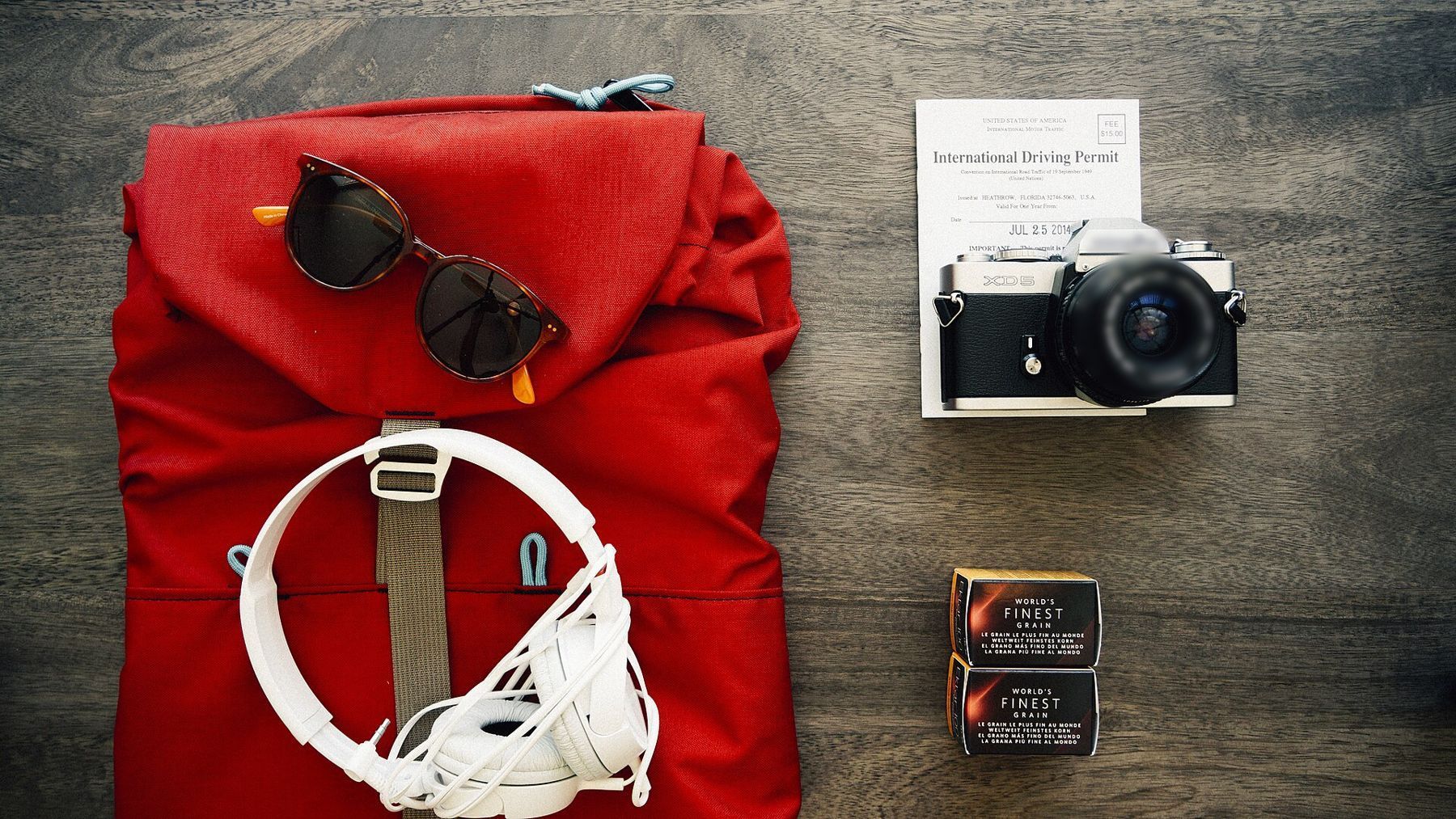
These are the items you cannot replace easily on the road, so they get their own block and travel in the bag that stays with you. Passport or identity card, any visas or entry approvals, travel insurance details, booking confirmations and a paper copy of the important pages. Entry rules and passport validity requirements vary and change, so check the official government site for your destination before you go. The documents and copies page explains how to set up a folder that holds all of this.
For money, take two ways to pay that are kept in different places: a card in your wallet and a backup card or some cash in another bag. Tech should be simple: a phone, a charger, a cable, a plug adapter for your destination, and perhaps a small power bank. Check airline rules for spare batteries and power banks, which usually have to travel in the cabin and not in checked bags.
The one-bag idea
Travelling with one bag you can carry yourself changes how a trip feels. Stairs, cobbles, crowded trains and long walks from the station all get easier. You skip the wait at the baggage belt, and nothing can be lost in transit.
The one-page list makes one bag possible, and one bag keeps the list honest. Lay everything out on the bed before you pack, then remove a third of it. Roll soft clothes, use the inside of shoes for socks, and leave a little space for the return. If the bag still will not close, the list is too long, not the bag too small.
Pack in a fixed order so you can find things without unpacking. Heavy items go at the bottom, close to your back if it is a backpack. Clothes go in the middle, rolled or folded into a few soft pouches by type. The things you need on the journey, a layer, water, the documents pouch and the charger, go on top or in an outside pocket. Use the same order every time, and you will know where your socks are in a dark room at midnight.
Airline cabin bag sizes and weight limits vary by airline and by fare, so check the rules for your ticket rather than relying on a general size. When the trip is over, sit down with the list and a pencil. Mark what you never used, and note what you wished you had. After three or four trips, the page will be short, tested and entirely your own.
If the bag still will not close, the list is too long, not the bag too small.