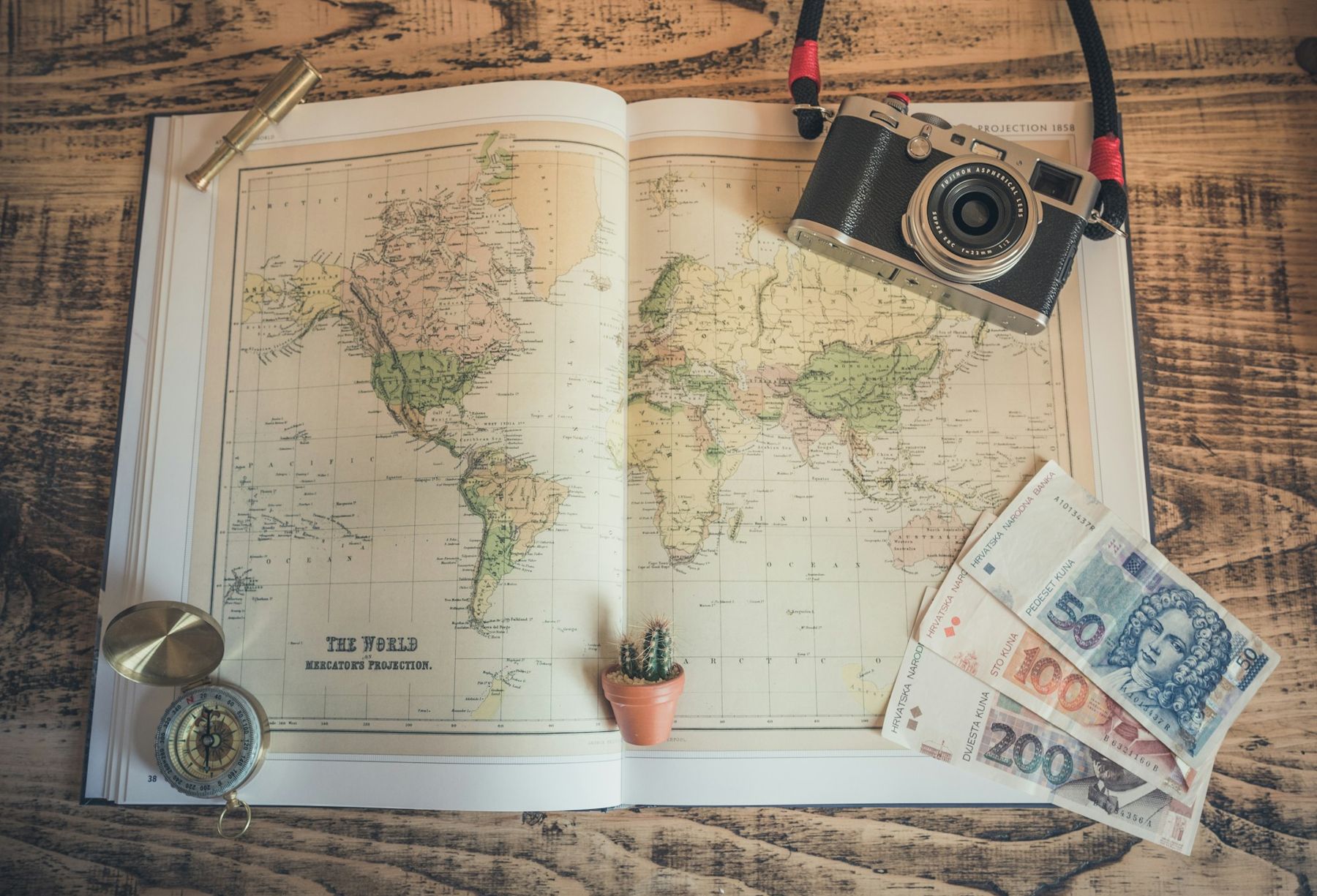
Most travel budgets fail for the same reason: they are one big number. A total for the whole trip says nothing about Tuesday, and by the time you realise you have spent too much, the trip is half over. A daily budget fixes that. It turns the money into a number you can hold in your head each morning and check against each evening, in a notebook, in a couple of minutes.
The system has three parts. Separate the costs that are paid before you go from the ones you pay each day. Give the daily costs a single number. Then write down what you spend, every day, without fail.
Fixed costs and daily costs
Start with a page at the back of the notebook headed fixed costs. These are the things you pay once, usually before you leave: flights, long train journeys, rooms booked in advance, travel insurance, any visa or entry fees, and tickets for anything with a set date. Add the costs of getting to and from the airport at both ends, which are easy to forget.
Pay as many fixed costs as you sensibly can before you go, and tick them off. Once they are paid, they are no longer part of the daily sum, and they cannot surprise you on the road. Anything you have not booked, such as rooms you mean to find as you go, stays on the list with an estimate beside it.
Daily costs are everything else: food and drink, local transport, entry fees, small purchases, laundry, tips where they are customary, and the coffee you did not plan. These are the costs a daily budget controls.
Setting the daily number
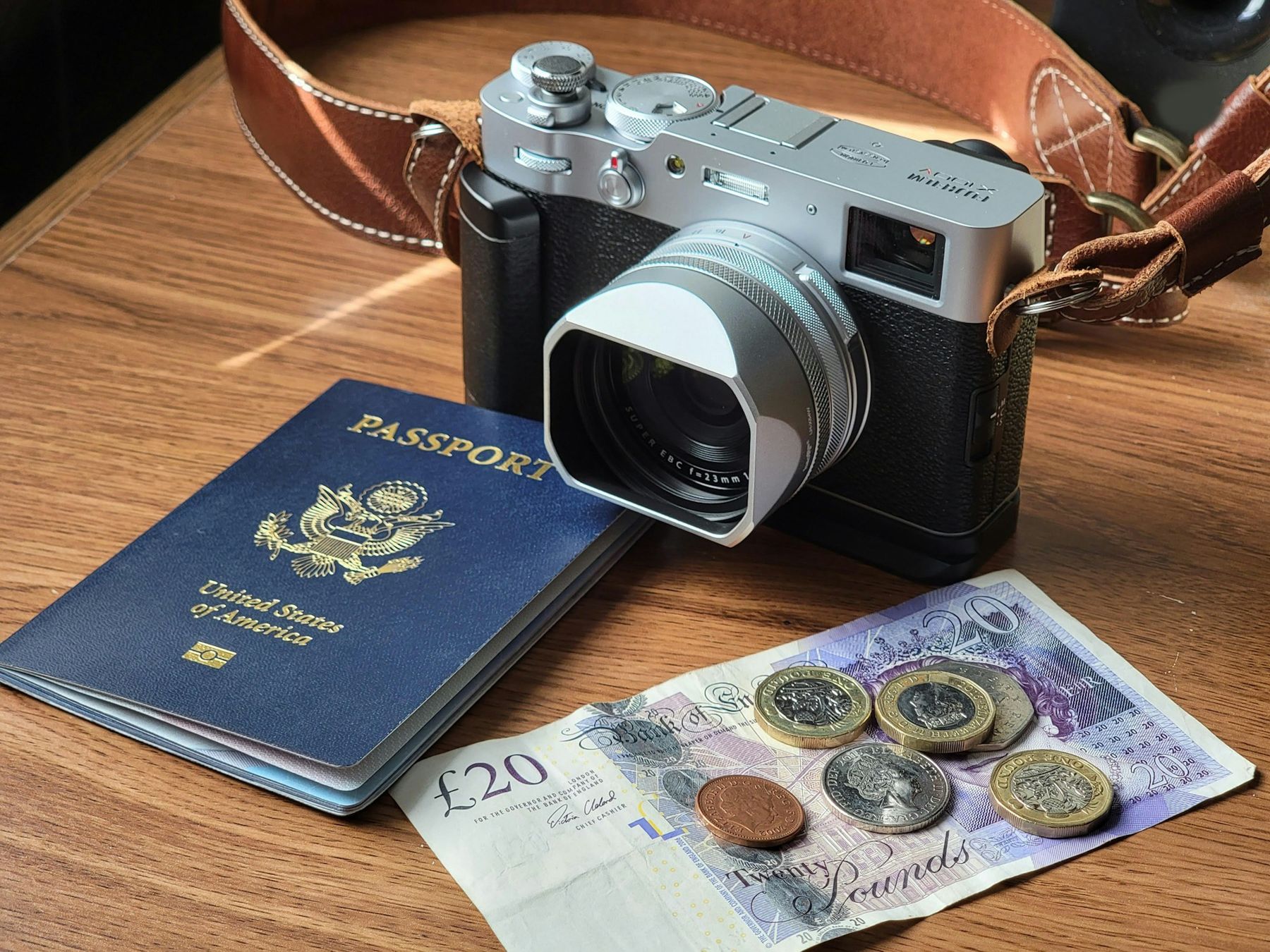
Take the money you have left after the fixed costs, set a buffer aside, and divide the rest by the number of days. The buffer matters. Something always costs more than you thought, from a taxi in the rain to a pharmacy visit, and a buffer of around a tenth of the daily total keeps one bad day from breaking the plan.
Prices vary widely between countries, between cities in one country and between seasons, so look at what daily costs are likely to be where you are going before you settle on the number. If the trip crosses an expensive city and a cheap region, give each its own number rather than averaging them. The cheap days will not rescue the expensive ones unless they come afterwards and you know how much they must save.
Write the number at the top of every day's page in the notebook. It is easier to stick to a number you see each morning.
The notebook ledger
A ledger sounds grand. In practice, it is a page with three columns: what, how paid and how much. Each evening, before you sleep, write every spend of the day. Add them up, and write the total against the daily number. Then carry the difference forward: under budget, and tomorrow has a little more; over, and it has a little less.
| What | Paid by | Amount |
|---|---|---|
| Breakfast | Card | Rounded up |
| Day transport ticket | Card | Rounded up |
| Museum entry | Card | Rounded up |
| Market lunch | Cash | Rounded up |
| Day total, against the daily number | Carry forward |
It is easier to stick to a number you see each morning.
A budgeting spreadsheet or app does the same job, and some travellers prefer one. The notebook has two advantages: it works with no battery, and writing each spend by hand makes you notice it in a way that tapping a screen does not.
Cash, cards and currency
Carry at least two ways to pay, kept in different places: a card in your wallet and a second card, or some cash, in another bag. If one is lost or blocked, the other keeps you going. Before you leave, check with your bank what it charges for card payments and cash withdrawals abroad, since fees vary a lot between cards.
When a card machine or cash machine abroad offers to charge you in your home currency, it is usually cheaper to choose the local currency and let your own bank do the conversion. The machine's own rate often includes a margin that is easy to miss.
How much cash you need depends on the country. Some places run almost entirely on cards and phones; in others, markets, small cafes, rural buses and tips work in cash. Read up on your destination, carry a modest amount for the first day, and take out more from a machine at a bank when you need it, rather than carrying large sums. Log cash withdrawals as cash in hand, then log what you spend from it, so the ledger does not count the same money twice.
Keep the cash in two places as well. A day's worth goes in a pocket or a small purse, and the rest stays in a zipped inner pocket of the bag or locked in the room. Paying from the day's pocket also works as a quiet check on the budget: when it is empty, the day is spent. Leftover coins at the end of a trip are hard to change back, so try to run down the cash over the last day or two and pay the final bills by card.

When you go over
You will go over on some days. A long dinner, a ticket you had not planned, a rainy afternoon spent in a museum. That is fine, as long as you see it the same evening. Recover over the next two or three days, not in one bleak day of bread and water: a picnic lunch from a market, a free walking day in a park, a museum on its free-entry day if it has one.
If you go over three days running, the number is wrong, not you. Look at the ledger, find where the money actually goes, and either raise the number from the buffer or cut something larger, such as a paid day trip. The shoulder season can help on future trips, since rooms and flights often cost less outside the peak months.
After the trip
When you get home, add up the ledger. Compare what you spent each day with the number you set, and note the categories that ran over. That one page is worth more than any general advice, because it is your own spending, in your own style of travel. Copy the real daily figure into the front of the notebook for next time, beside your one-page itinerary, and the next budget will start from facts rather than hope.
Who shot these snapshots
- Chris Lawton Unsplash License
- Benjamin White Unsplash License
- Unknown Public domain
- Dey.sandip CC BY-SA 4.0